Muntu Warriors Anime: What You Really Need to Know
Intro
This is probably the question I get the most: “Why don’t you make a Muntu Warriors anime? Have you thought about adapting it in anime? It would look great as an anime. Are you planning to do one? With AI, it’s easy now, right?”
On paper, it makes sense. Anime is extremely popular. And AI can now generate images, videos, voices… so why not just make an anime?
But between what people imagine… and the reality of an animated project, there’s a huge gap.
Instead of answering this over and over again, it’s better to lay things out clearly once and for all. What an anime really is, what AI actually allows today, and why I’m not rushing into it.
What an Anime Really Costs
A single episode lasting about twenty minutes, like those of Attack on Titan or Jujutsu Kaisen, requires an enormous amount of work.
We’re talking about thousands of shots, weeks of production, and entire teams. The most common estimates range from 100,000 to 300,000 euros per episode. As a result, a full season can quickly run into the millions.
This level of cost reflects everything that goes on behind the scenes: coordination, direction, precision, and back-and-forth revisions. Because an anime is a structured collaborative project, not just a simple visual production.
All the jobs behind an anime
When you watch an episode, you see the final result. What you don’t see is everything that goes on behind the scenes.
It all starts with writing and storyboarding. The script is turned into a storyboard, shot by shot, with camera angles, pacing, and artistic intent.
Next comes the animation phase. There are the key animators, who draw the main poses, and the in-betweeners, who fill in the movements between those poses. Added to this are the artists responsible for backgrounds, effects, and color.
At the same time, there’s the art direction, which ensures visual consistency. Character design, which makes sure the characters remain recognizable in every scene. Editing, which sets the pace.
Then comes the sound. The voice actors lend their voices, bringing their own interpretations. The composers work on the music. Sound design adds the ambient sounds, the impacts, and the details that bring a scene to life.
All of this is constantly supervised, corrected, and adjusted.
It is this accumulation of layers that gives a work its depth. And that is also why it takes time and is expensive.
What AI Really Changes
AI now makes it possible to speed up certain stages of the process: generating images, testing styles, and producing clips. On a short project, this can yield impressive results.
But when it comes to sustaining a story over several minutes, the limitations quickly become apparent. Faces change from one shot to the next, proportions shift, and scenes don’t always flow smoothly. As a result, you have to constantly correct, restart, and adapt.
The time saved at the beginning ends up being spent elsewhere.
Today, AI is a valuable tool for exploring, experimenting, and prototyping. But as soon as you’re looking for stability over the long term, you have to take back control.
Production costs with AI
AI does indeed help reduce certain production costs. For a twenty-minute episode, it’s possible to bring costs down to around 1,000 to 4,000 euros using a highly optimized, solo approach. But that figure doesn’t tell the whole story.
Producing a full episode is still a time-consuming process. You have to generate dozens, sometimes hundreds of sequences, correct inconsistencies, reshoot shots, adjust facial expressions, and rework the editing. What is saved on generation is largely reinvested in time. In practice, an episode can take between 4 and 8 weeks of work, even with AI tools.
And as soon as you try to improve the quality, costs rise quickly. Adding clean voiceovers, proper sound design, coherent music, or simply stabilizing the characters from one scene to the next can easily push the budget up to 3,000 to 10,000 euros per episode.
Despite this investment, limitations remain. Characters may lack consistency, some animations appear artificial, and maintaining coherence over twenty minutes remains difficult. AI speeds up certain steps, but it doesn’t turn a complex project into something simple or free.
Branding, interpretation, and what sets it apart
There’s another point that’s often overlooked: what gives a work its value.
Beyond design, a character is also a voice, a presence, and a way of expressing oneself. There’s a real difference in value between saying that one voice is generated by ElevenLabs and another is voiced by an actor like Denzel Washington.
The same goes for music. Memorable moments like Pain’s first appearance in Naruto, the moments when Kratos prepares to slay a god in God of War III, Mufasa’s death in The Lion King, the Triello in The Good, the Bad, and the Ugly… The impact of these scenes was conceived, composed, and performed by real artists.
Even the most technologically advanced productions, like James Cameron’s Avatar films, rely above all on acting, direction, and the human effort behind every detail.
An AI-generated rendering can be polished, sometimes even stunning. But it often lacks that intention behind every detail—that sense that someone made choices.
And if we look beyond the screen, a powerful work also comes to life through interviews, events, interactions with the audience, and musical performances. These are things that are difficult to sustain over the long term if an animated project is created entirely with AI.
How Great Anime Are Made
Another key point: in most cases, anime is never the starting point of a project.
The biggest franchises start with a manga, a comic book, a game, or a universe that already exists and has proven its strength. The anime comes next to amplify and accelerate an already solid foundation.
For example, series like DBZ, Naruto, One Piece, Pokémon, Demon Slayer, and My Hero Academia were already hugely successful before their anime adaptations.
Is an anime profitable?
You might think that anime is highly profitable. In reality, that’s rarely the case directly.
Production is expensive, and broadcasting alone isn’t always enough to recoup the investment. What generates revenue are the related products: books, figurines, games, and licenses.
Anime often serves as a showcase. It attracts, it amplifies, it provides visibility.
That’s why many projects start elsewhere, with a solid foundation that already exists.
The choice for Muntu Warriors
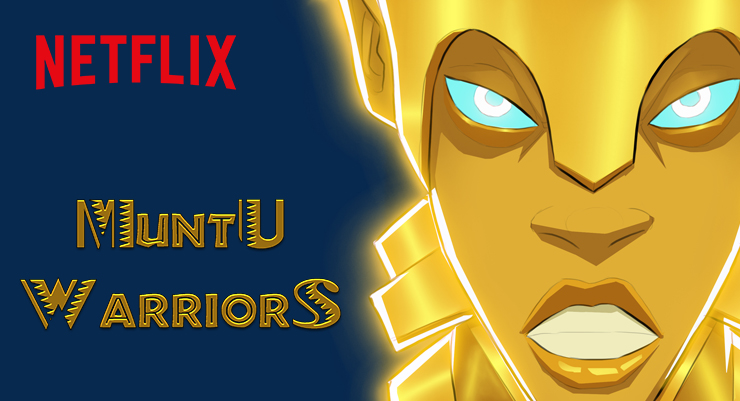
If we return to the context of Muntu Warriors, the real question isn’t “Can we make an anime?” but rather: “Is this the right time to do it?”
Today, I have two options. I can try to produce an anime with limited resources, using AI to speed things up. Or I can focus all my resources on what already makes Muntu Warriors strong.
And of course, I chose the second option.
I prefer to build a solid foundation: develop a strong story, compelling characters, and a clear identity; improve the production and distribution of the books; enhance quality; and expand the universe. And on top of that, develop more accessible formats through merchandise or digital content.
Because spreading your resources too thin risks weakening everything.
Making an anime now, under these conditions, would amount to offering a version that falls short of the project’s true potential. And that’s something I don’t want to do.
If you want the anime Muntu Warriors
If you want to see Muntu Warriors as an anime as much as I do, then the answer is simple: It all starts with the basics.
The more readers there are, the more support there is, and the further the project progresses. The more people discover this universe, the more doors it opens. That’s just how it works.
Today, Muntu Warriors is still too little-known to move on to the next stage. And that’s where you can really make a difference.
By talking about the project with those around you. By sharing this article. By showing it to someone who might be interested. By subscribing, following, and spreading the word.
It’s simple, but it makes a huge difference.
And if you want to go further, you can also join the adventure directly by supporting the books and following the project more closely.
That’s how things are built. Little by little, but solidly.
An anime for Muntu Warriors, I’ve been thinking about it. Obviously.
But it’s not something I’m going to do just for the sake of saying I did it.
Right now, the project is still taking shape. The books, the universe, the characters… that’s the priority. That’s where it all comes down to.
Making an anime right now, with limited resources, would mean creating a version that falls short of what Muntu Warriors can truly be. And that doesn’t interest me.
When the anime does come, it will be at the right time, with the right resources.
In the meantime, the most important thing is to keep expanding the universe.
1 thought on “Muntu Warriors Anime: What You Really Need to Know”
Gotang
Un article éclairé sur le sujet des animés et de l’IA !
Want a taste of Muntu Warriors first? By subscribing, you will get a FREE Sample in PDF of the comic books of Muntu Warriors. And you will be informed about all our latest news and you will get some of our articles about African and Black culture.
The future needs us to fight for it. Join the fight!





 English
  French
1 thought on “Muntu Warriors Anime: What You Really Need to Know”
Un article éclairé sur le sujet des animés et de l’IA !