When we talk about manga, most people immediately think of Japan. And that’s normal. Japanese manga has shaped entire generations of readers, authors, and creators around the world. But in recent years, another trend has begun to emerge: African manga.
The question often arises: Is it the same thing? Is it a copy? Is it really manga?
The answer is simpler, and more interesting, than it seems.
What African Manga and Japanese Manga have in common
Before talking about differences, we must be honest: yes, there are similarities. And they are acknowledged. African manga uses the same foundations as Japanese manga:
– dynamic visual storytelling
– clear and fast-paced action scenes
– characters designed to make an impression from their first appearance
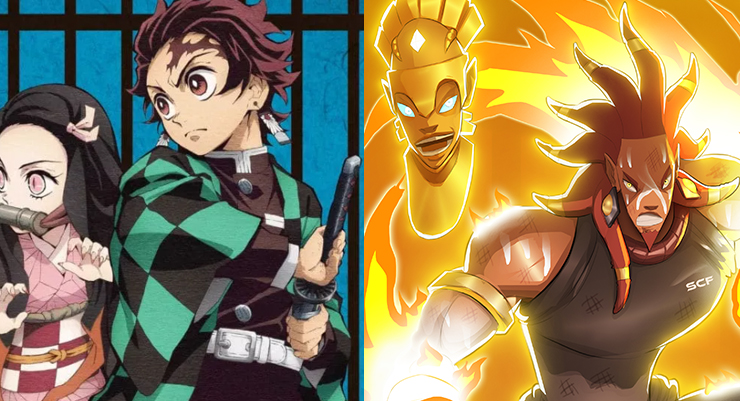
We see the same desire to quickly hook the reader, to create a strong emotional connection with the heroes, their struggles, and their flaws. The graphic codes are also familiar: panel layout, angles, exaggerated expressions when needed to emphasize an emotion, moments of tension, bursts of energy.
In short: We remain firmly within the language of manga. This language is understood by readers around the world, and African manga does not seek to reject it.
Where the paths truly diverge
The differences are not superficial. They are not about “manga style or not.”
When we talk about differences, we are referring more to what is being told and where it comes from, rather than talking about manga style or not.
The theme
Japanese manga is deeply influenced by its context:
Japanese society
Social pressure
Discipline
The Individual VS the Group
Loneliness, effort, personal achievement
African manga is based on other realities
The community
Transmission
Memory
The relationship to power
Cultural, spiritual, and social heritage
There is less talk of “becoming the strongest” for oneself, and more often of what strength represents and for whom it is used.
Tales, legends, and imagination
Japanese manga draws heavily on...
Shintoism
Buddhism
Japanese Folklore
Yokai, spirits, and local myths
African manga is rooted in...
African mythology
Oral traditions
Stories passed down from generation to generation
Spiritual and symbolic figures, some of which have been forgotten
As a result, even when the action is intense, the narrative background is completely different.
Codes, languages, and ways of speaking
Japanese manga has its own language codes
respect for hierarchies
honorific expressions
meaningful silences
In African manga, the language is often...
more direct
more oral
sometimes more raw
The characters speak like real people, with cultural references, local expressions, and a way of addressing elders, peers, and enemies.
Here, we are talking about a question of culture.
Body types: a detail that is not just a detail
This is a point that is rarely discussed, but essential.
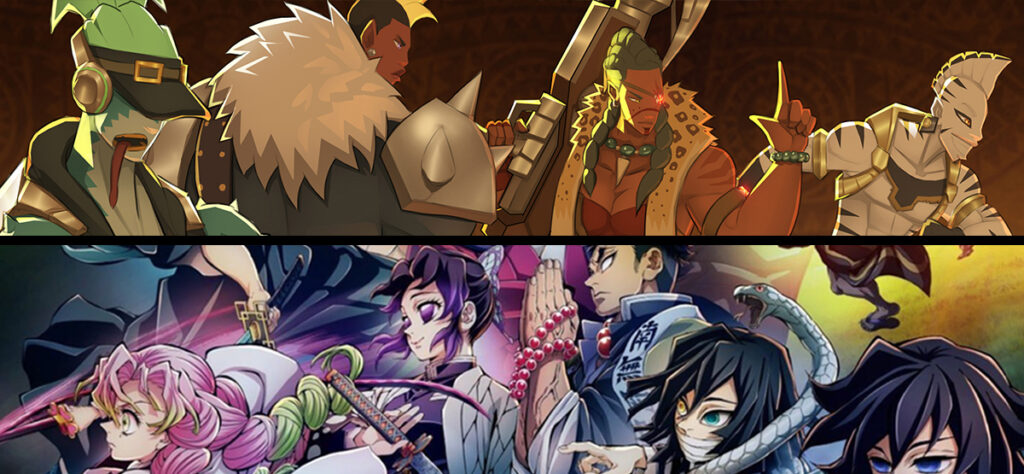
The bodies in African manga do not tell the same story:
more massive builds different silhouettes assertive facial features a more grounded physical presence
This can be an interesting way to represent credible, powerful, and diverse Black bodies, far from standardized models.
In this way, the body becomes a cultural marker in its own right.
Should we choose between African manga and Japanese manga ?
Honestly? No. And that’s not the goal.
African manga isn’t trying to replace Japanese manga. Nor is it trying to artificially distance itself from it. The idea is to take the best of both worlds.
The readability, effectiveness, and impact of Japanese manga. Mixed with the cultural richness, stories, and identities of Africa.
Manga remains the medium. The stories, however, are changing.
Where does Muntu Warriors fit into all this?
Muntu Warriors was born out of this logic. Using manga codes to tell a different story: black heroes, African references, spiritual and political conflicts, and a worldview that comes neither from Japan nor the West
It’s one proposal among many, part of a broader movement that shows that manga is no longer limited to a single territory. If this approach to manga appeals to you, Muntu Warriors is my way of exploring it.
A series that uses manga conventions to tell stories rooted in African cultures.
African manga is following in its footsteps, but is heading in a different direction.
The more diverse voices, cultures, and imaginations there are in manga, the richer the medium will become.
And ultimately, it is the readers who stand to gain.
Want to follow the evolution of African Manga?
Want a taste of Muntu Warriors first? By subscribing, you will get a FREE Sample in PDF of the comic books of Muntu Warriors. And you will be informed about all our latest news and you will get some of our articles about African and Black culture.
The future needs us to fight for it. Join the fight!





 English
  French